Why protein matters
Protein is one of the most important macronutrients for body composition, weight management and everyday nutrition. It helps support muscle maintenance, recovery, satiety and a more structured diet. If you are trying to lose weight, gain muscle or simply improve your nutrition routine, your protein target is one of the first numbers you should understand.
Many people focus only on calories. Calories are important, but they do not tell the whole story. Two diets can contain the same number of calories and feel completely different depending on protein intake, food choices and meal structure. A diet with enough protein is usually easier to follow because meals feel more satisfying and your plan has a stronger foundation.
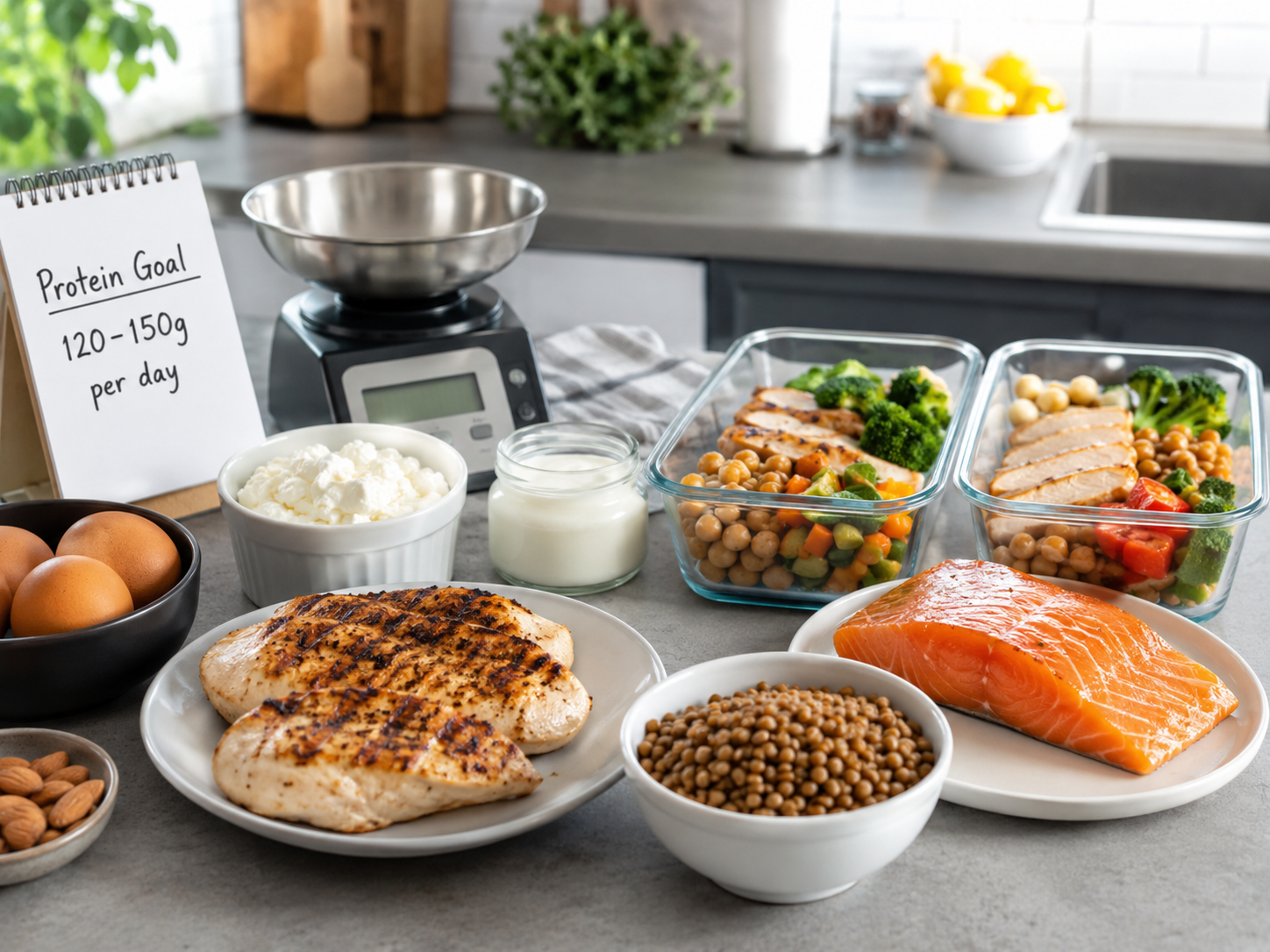
How much protein do you need per day?
Your ideal daily protein intake depends on your body weight, training routine, goal, calorie intake and personal preference. A sedentary person who simply wants general nutrition support will usually need less protein than someone who is training hard, dieting or trying to build muscle.
A practical range for many active people is roughly 1.6 to 2.2 grams of protein per kilogram of body weight per day. People who are in a calorie deficit may benefit from the higher end of that range because protein can support satiety and muscle maintenance while calories are lower. People focused on muscle gain also need enough protein, but they do not automatically need extreme amounts if total calories and training are already well structured.
The easiest first step is to calculate your personal calories and macros. You can use the free MacroFit calorie and macro calculator to estimate your daily calorie target and get a starting macro split based on your goal.
These numbers are examples, not fixed rules. Your best target depends on calories, training, body weight and consistency.
Protein for weight loss
Protein becomes especially useful during weight loss because calories are lower. When you eat fewer calories than you burn, hunger can increase and meals can feel smaller. A higher-protein approach helps many people stay full for longer and makes the diet feel more controlled.
During a calorie deficit, your body still needs enough nutrients to support training, recovery and muscle maintenance. This does not mean protein magically causes fat loss by itself. Fat loss still depends on calorie balance. But protein can make the process more sustainable because it improves the structure of the plan.
A useful strategy is to build each main meal around a protein source first, then add carbohydrates, vegetables and fats around it. This prevents the common mistake of filling calories with snacks, oils, sauces and low-protein foods while missing the protein target at the end of the day.
Protein for muscle gain
If your goal is muscle gain, protein supports the repair and growth process that follows resistance training. However, protein only works well when the rest of the plan is also aligned. You still need progressive training, enough total calories, enough carbohydrates for performance and enough sleep.
Many people overcomplicate muscle gain by adding unnecessary supplements before the basics are in place. In reality, a consistent protein target, a small calorie surplus, structured training and repeatable meals will do more than chasing the newest trend. A protein shaker or protein powder can be useful, but it should support the plan rather than replace real meals.

Best protein sources
Good protein sources do not have to be complicated. The best choices are foods you enjoy, tolerate well and can repeat. Some people prefer animal-based protein sources, while others prefer plant-based options or a mix of both.
| Protein source | Why it helps | Best use |
|---|---|---|
| Chicken, turkey, lean meat | High protein, easy to portion | Meal prep, lunch, dinner |
| Eggs and Greek yogurt | Flexible and simple | Breakfast, snacks |
| Fish and seafood | Protein plus useful fats | Dinner, balanced meals |
| Lentils, beans, tofu | Plant-based and filling | Bowls, stews, vegetarian meals |
| Protein powder | Convenient, not mandatory | When meals fall short |
How to spread protein across the day
You do not need to eat protein every hour. But spreading protein across the day is usually easier than trying to hit your entire target at dinner. A simple structure could be breakfast, lunch, dinner and one snack. Each meal can include a protein source that moves you closer to the daily target.
For example, someone aiming for 140 grams of protein per day might use four protein moments: 35 grams at breakfast, 40 grams at lunch, 45 grams at dinner and 20 grams from a snack. The exact split does not need to be perfect. The goal is to avoid ending the day far below the target.
Common protein mistakes
The first mistake is guessing. Many people think they eat enough protein, but their actual intake is much lower. The second mistake is relying only on dinner. If most of your protein comes at the end of the day, the target becomes harder to reach. The third mistake is treating protein powder as a magic solution. It can help, but it does not fix an inconsistent diet.
Another common mistake is ignoring calories. Protein foods still contain calories. Nuts, cheese, fatty cuts of meat and some protein bars can be useful, but they can also add calories quickly. That is why protein planning should work together with your calorie target, not against it.
Use your protein target with your calorie target
The best nutrition plan connects calories and macros. Your calorie target tells you the energy budget. Your protein target gives the plan structure. Carbs and fats then fill the remaining calories based on your preference, training and hunger.
If you have not calculated your starting point yet, use the MacroFit calculator before choosing random numbers. Once you know your calorie and macro targets, protein planning becomes much more practical. You can build meals around real numbers instead of guessing.
Calculate your protein target
Use the free MacroFit calorie and macro calculator to estimate your daily calories, protein, carbs and fats based on your goal.
Open the MacroFit CalculatorDisclaimer: This article is general informational content only and is not medical, nutritional or therapeutic advice. If you have medical conditions, pregnancy, kidney disease, eating disorders, medication use or special dietary needs, consult a qualified professional before changing your diet.