The short answer
If your goal is weight loss, calories matter most for the actual change in body weight. A calorie deficit is the condition that allows your body to use stored energy. Without that deficit, fat loss will not happen consistently, no matter how clean your food choices look.
Macros still matter because they shape the quality of your calorie target. Protein helps with satiety and muscle retention. Carbohydrates support training and daily energy. Fats support hormones, cell function and food satisfaction. The smartest strategy is not calories or macros. It is calories first, macros second, consistency always.
If you do not know your own calorie and macro targets yet, start with the MacroFit calorie and macro calculator. Then use this article to understand what those numbers actually mean.
What calories actually do
Calories are a measure of energy. Your body uses energy for everything: breathing, moving, digesting, training, thinking and maintaining body temperature. When you consistently eat fewer calories than your body uses, your body has to cover the gap from stored energy. That is the foundation of weight loss.
This is why a calorie deficit matters more than any single food rule. You can eat healthy foods and still gain weight if total calories are too high. You can also lose weight while eating some imperfect foods if total calories are controlled. That does not mean food quality is irrelevant. It means energy balance sets the direction.
What macros actually do
Macros, short for macronutrients, are protein, carbohydrates and fats. They provide calories, but they also affect how your diet feels and performs. This is where many people get confused. Macros do not override calories, but they can make a calorie deficit easier or harder to follow.
Protein is especially important during fat loss because it helps you stay full and supports lean muscle. Carbohydrates are useful for performance, focus and training. Fats are important for health, taste and satisfaction. If you cut any macro too aggressively, your plan may work on paper but fail in real life.
That is why the protein guide and the calorie deficit guide belong together. One explains the target condition. The other explains a key macro that helps you stay consistent.
| Factor | Primary role | Why it matters |
|---|---|---|
| Calories | Energy balance | Determines whether weight loss, maintenance or weight gain is likely over time |
| Protein | Satiety and muscle support | Helps make a calorie deficit more manageable and supports lean mass |
| Carbohydrates | Energy and performance | Supports training, movement, focus and meal satisfaction |
| Fats | Health and flavor | Supports hormones and taste, but is calorie dense and should be portion-aware |
Calories vs macros: what matters more?
For body weight change, calories are the primary driver. If total calories are too high, even a perfectly balanced macro split will not lead to fat loss. That is the uncomfortable but useful truth. However, if calories are controlled but macros are poorly structured, the plan may feel miserable, low-energy or impossible to repeat.
A practical example makes this clear. Imagine two people eating the same calorie target. One gets enough protein, eats filling foods, includes carbs around training and uses fats in measured portions. The other eats low-protein snacks, drinks calories, skips vegetables and guesses portion sizes. On paper, both have the same calories. In real life, one plan is much easier to follow.
For weight-loss execution, think of your plan as three operating levers. The exact percentages are not medical rules; they are a practical prioritization model for users building a diet strategy.

When macros matter more
Macros matter more when your goal is not just scale weight. If you want to preserve muscle, train well, avoid extreme hunger and maintain the result, macro quality becomes a major advantage. This is especially true in a calorie deficit, where every calorie has to work harder.
Protein should usually be the first macro to protect. After that, adjust carbs and fats based on preference, training and energy. Some people feel better with more carbs. Others prefer slightly higher fats. There is no universal split that beats adherence. The best macro split is the one that fits your calorie target and your real routine.
Common mistakes
The first mistake is tracking macros while ignoring calories. A meal can be high-protein, low-carb or clean and still exceed your calorie budget. The second mistake is cutting calories without caring about protein. That often leads to hunger and poor consistency. The third mistake is trying to perfect macro ratios before creating basic habits.
Another common issue is switching strategies too often. One week low carb, next week low fat, then fasting, then meal prep, then no tracking. Instead, choose one clear structure for a few weeks. Track enough data to see what is happening. Then adjust based on results rather than emotion.
How to use both in practice
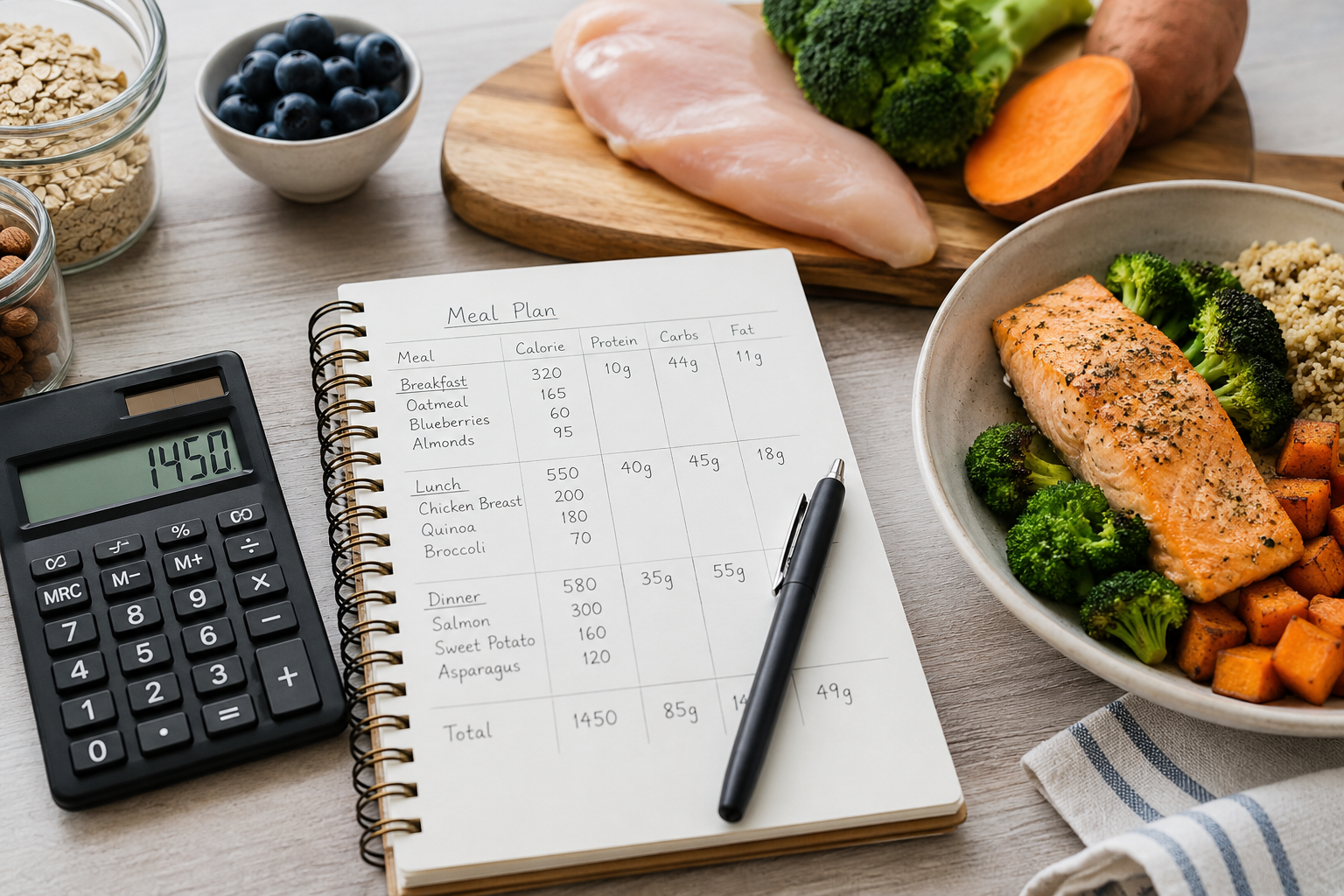
Start with calories. Use a calculator to estimate your target for weight loss, maintenance or muscle gain. Then set protein. After that, use carbs and fats to build meals that fit your lifestyle. If you train hard, carbs may deserve more room. If you prefer richer foods, fats may be slightly higher, but portion awareness becomes more important.
The easiest workflow is simple: calculate your numbers, build two or three repeatable meals, monitor body weight trends and adjust after enough data. You do not need to rebuild your plan every day. You need a repeatable system that makes the right choices easier.
To get your starting numbers, use the MacroFit calculator. Then connect this article with the meal prep guide to turn the numbers into real meals.
Calculate your calories and macros
Use the free MacroFit calculator to estimate your daily calorie target and macro split, then build a plan that is easier to follow.
Open the MacroFit CalculatorDisclaimer: This article is general informational content only and is not medical, nutritional or therapeutic advice.