Why meal prep works for weight loss
Most people do not struggle with weight loss because they lack motivation for one day. They struggle because decisions repeat all week. When every lunch, snack and dinner is improvised, calories rise quickly and protein often falls behind. Meal prep changes that dynamic. It gives you structure before hunger, stress and convenience start making decisions for you.
A good meal prep system does not need to be extreme. It simply means planning a few meals ahead, preparing ingredients in batches and keeping your environment aligned with your goal. If you already know your calorie and macro targets, the system becomes even stronger. If you do not know your numbers yet, start with the MacroFit calculator so your prep matches your goal instead of random internet advice.
Meal prep also improves consistency. Weight loss usually happens when ordinary weekdays become easier to manage. You do not need perfect food choices every hour. You need a setup that makes the better choice the easier choice most of the time.
Start with calories and protein first
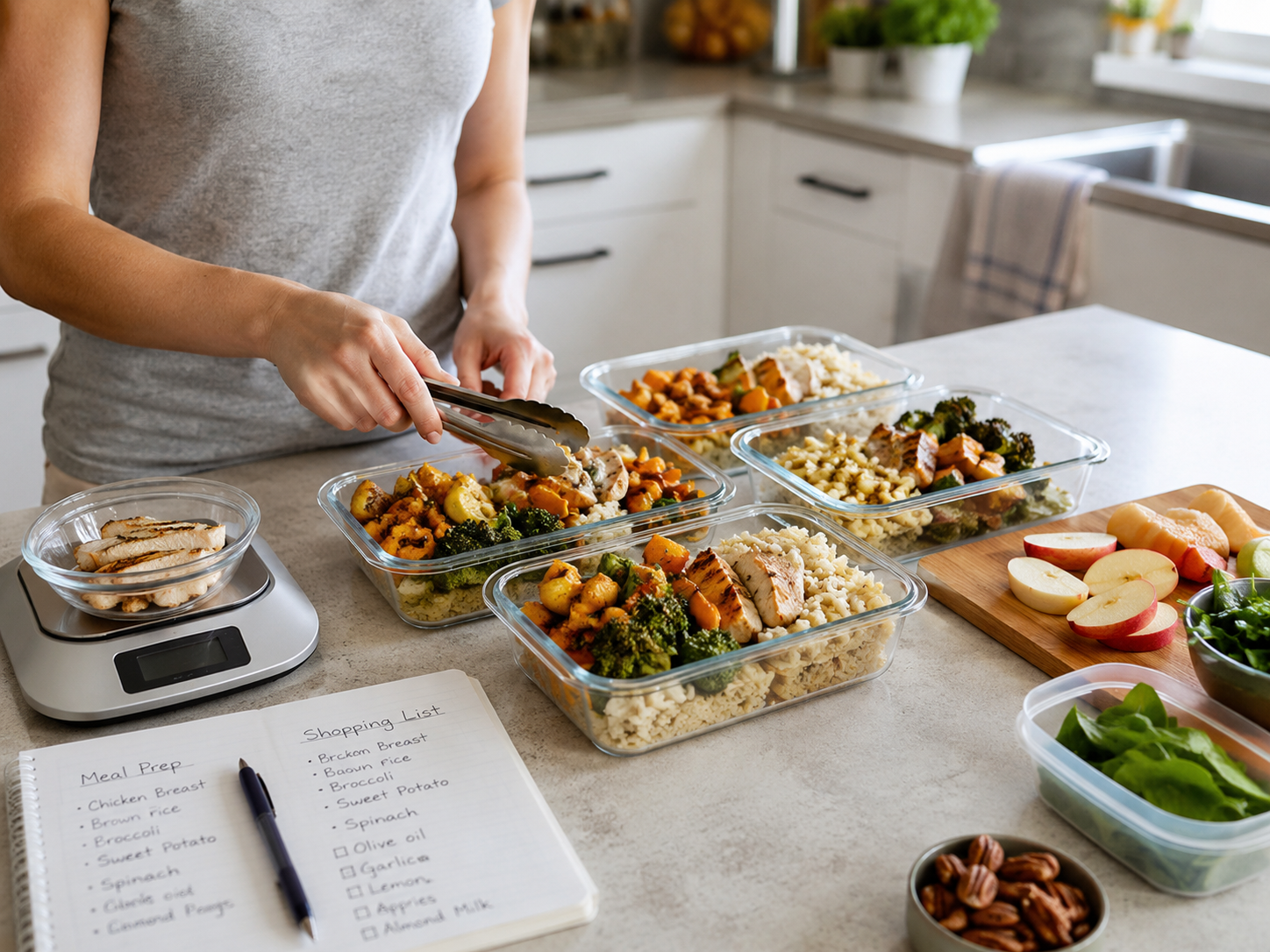
The biggest meal prep mistake is focusing on recipes before focusing on targets. Before you decide what to cook, know the direction of the plan. For weight loss, you need a calorie deficit. That does not mean starving yourself. It means eating below maintenance in a way that still gives you enough energy, enough protein and enough food volume to stay consistent.
This is why meal prep works best when calories and protein lead the setup. Calories control the energy budget. Protein helps preserve muscle, supports fullness and gives meals more structure. Carbohydrates and fats matter too, but once calories and protein are clear, the rest becomes easier to organize.
If you have already used the MacroFit calorie and macro calculator, use those results as the framework for your containers. If your calories are lower, your portions should reflect that. If your protein target is higher, build the meal around a protein source first and then add carbs, vegetables and fats around it.
What to include in a weight loss meal prep
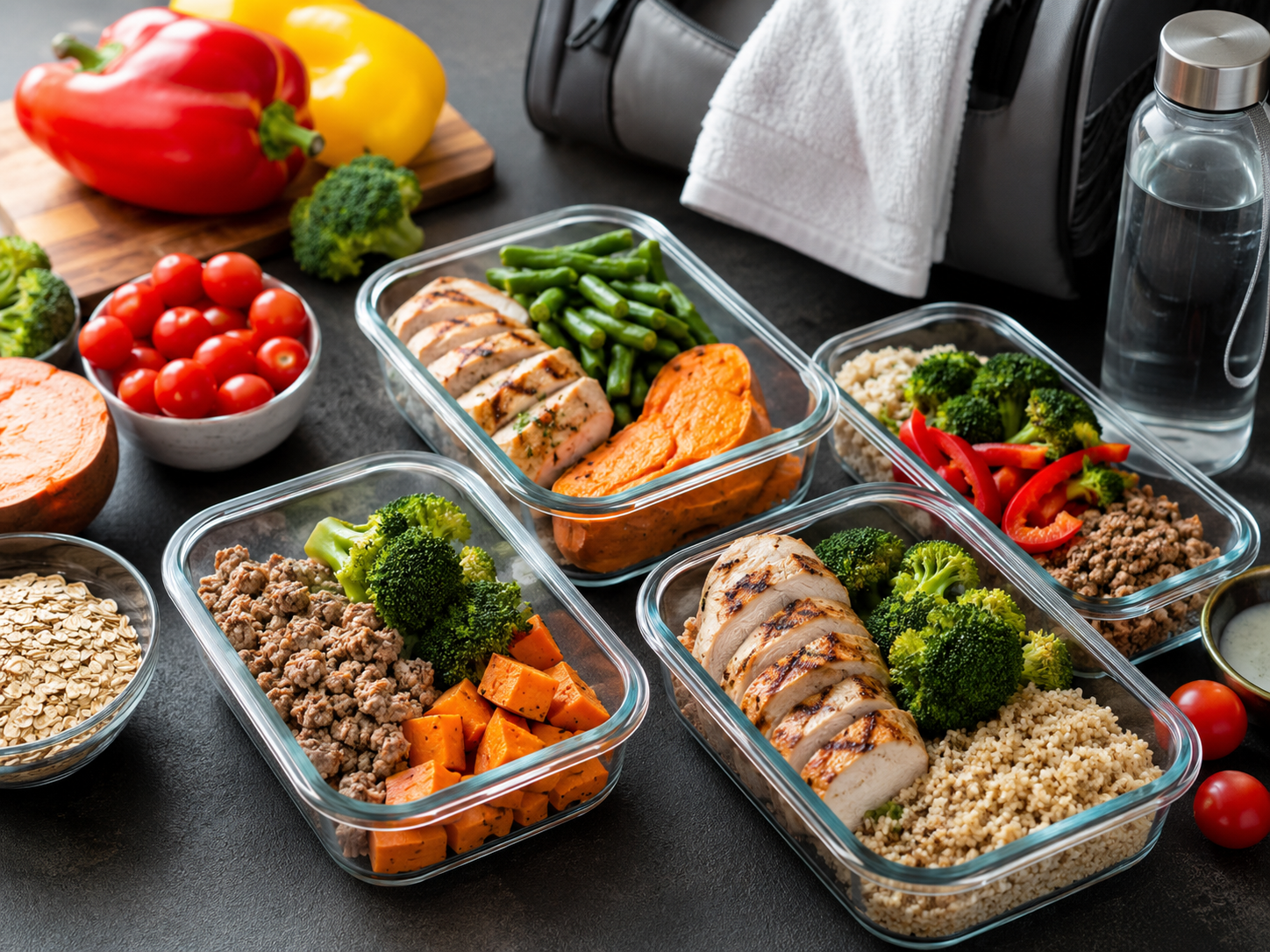
The best foods for meal prep are the foods you can repeat. Fancy recipes are not mandatory. In fact, simple meals are often better because they are easier to portion, easier to shop for and easier to track when needed. Think in categories instead of perfect recipes: one lean protein source, one carb source, a high-volume vegetable and one measured fat source or sauce.
Lean proteins might include chicken breast, turkey, lean ground meat, fish, eggs, Greek yogurt, tofu or cottage cheese. Carb sources can include potatoes, rice, oats, pasta, wraps, fruit or beans. High-volume foods usually mean vegetables and salads: broccoli, spinach, peppers, green beans, cucumber, tomatoes or mixed vegetables. Fats might come from olive oil, avocado, nuts, cheese or dressings, but the key is to measure them because calories add up quickly.
| Meal prep category | Examples | Why it matters |
|---|---|---|
| Protein base | Chicken, turkey, tofu, eggs, Greek yogurt | Supports fullness and helps you hit daily protein |
| Carb source | Rice, potatoes, oats, wraps, fruit | Useful for energy, training and meal satisfaction |
| Volume foods | Broccoli, spinach, peppers, salads, green beans | Adds food volume without pushing calories too high |
| Flavor / fats | Olive oil, sauces, cheese, nuts, avocado | Improves taste, but should be portion-aware |
| Convenience items | Frozen vegetables, canned beans, cooked grains | Makes prep faster and more realistic |
How to keep meal prep simple
You do not need seven different lunches and seven different dinners. That is where people overcomplicate the system and then quit. A better approach is to use two or three core meals for the week. For example, you might prep a chicken, rice and broccoli lunch, a yogurt-and-fruit snack, and a simple turkey-and-potato dinner. Variation can come from seasonings, sauces and side swaps rather than completely rebuilding the plan every day.
A simple rotation also reduces shopping friction. When the grocery list stays familiar, you spend less mental energy and waste less food. This is especially useful if your goal is not just to lose weight for a week, but to build a method you can repeat for months.
A practical weekly workflow
The easiest meal prep system usually starts once or twice per week. Some people prep all main meals on Sunday. Others do a split system: a larger prep on Sunday and a smaller refresh on Wednesday. The right method is the one that fits your routine, fridge space and tolerance for repetition.
Check your target
Know your calorie and protein target before shopping or portioning meals.
Shop with intent
Buy mostly foods that already fit the plan instead of relying on willpower later.
Batch-cook basics
Cook proteins, carbs and vegetables in larger amounts to save time during the week.
Portion and store
Build containers that make weekday choices automatic and predictable.
A strong weekly routine might look like this: choose two protein sources, two carb sources and several vegetables. Cook those in bulk. Build a few complete meals and leave some ingredients separate for flexibility. This hybrid approach gives you structure without making every meal identical.
Common meal prep mistakes
One mistake is underestimating calorie-dense extras. Oils, creamy sauces, nuts, cheese and dressings can turn a healthy-looking meal into a much higher-calorie one. Another mistake is making meals too small. If every meal is tiny and unsatisfying, adherence breaks down fast. Weight loss meal prep should still feel like real meals, not punishment.
A third mistake is ignoring convenience. If the plan requires restaurant-level cooking every evening, it will not last. Frozen vegetables, rice packs, pre-washed salad, canned beans and simple spice blends are not signs of failure. They are strategic tools. Another problem is lack of protein. Many people prep carbs and vegetables but forget that the meal still needs enough protein to work well during a deficit.
Finally, do not confuse meal prep with perfectionism. Missing one meal or eating out once does not ruin the week. The point of the system is to make the next good decision easier, not to create guilt.
Do you need to track every gram?
Not always. Some people do well with precise tracking, especially at the beginning, because it teaches portion awareness. Others prefer looser structure once they understand their typical meals. The best answer is practical: use as much precision as you need to create progress, but no more than necessary.
For many beginners, a smart middle ground works well. Use the calculator to estimate calories and macros. Build repeatable meals. Measure the calorie-dense items more carefully. Then monitor body weight, hunger, energy and consistency over time. If progress stalls, adjust the portions instead of abandoning the plan.
If you want a clearer starting point, use the MacroFit calculator and compare your current meals with your estimated targets. That gives you a realistic baseline before you start cutting portions blindly.
How to make meal prep sustainable
Long-term success comes from systems, not intensity. Choose foods you actually like. Keep at least one quick backup meal in the house. Use containers that make portioning easy. Cook enough for convenience, but not so much that you get tired of the same meal for ten days. And leave room for normal life. A sustainable plan should survive work stress, busy days and weekends.
It is also helpful to think beyond the individual meal. Meal prep is really about environment design. When your fridge already contains foods aligned with your goal, you reduce friction. When the plan is visible, pre-portioned and easy to access, adherence becomes more automatic. That is exactly what most weight-loss phases need.
Turn your numbers into a real plan
Use the free MacroFit calculator to estimate your calories and macros, then build meal prep containers that actually match your goal.
Open the MacroFit CalculatorDisclaimer: This article is general informational content only and is not medical, nutritional or therapeutic advice. If you have medical conditions, pregnancy, eating disorders, medication use or special dietary needs, consult a qualified professional before changing your diet.